Camp NaNoWriMo: Day 4 – To plot or not to plot…

As promised yesterday I want to explain to you the differences between plotting a novel and winging it.
There are many people who will argue being a plotter (someone who plans where their story is going) is far more sensible and logical than being a pantser (the term for someone who writes by the seat of their pants), but then again there are just as many people that swear being a pantser is liberating, energises your writing and beats stuffy old plotting every time.
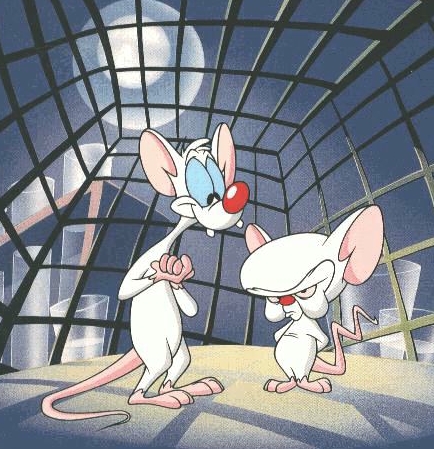
The same thing we do every night, Pinky – I’ll plot and you pants…
I’m not here to tell you which approach is better, because in truth both methods are equally useful (and useless) depending on a variety of factors. The most important of these factors is you (don’t worry I’m not going to launch into an Oprah rant). You should write in a manner that works for you…plot it, pants it, throw darts at a dictionary and string the words together – whatever works for you…you might even be better off not know if you’re a plotter or a pantser! Just knowing might throw you off balance and result in you over thinking every move you make. Have you ever been watching a movie and then halfway through notice the dreaded black bars at the top and bottom of the screen? How long have they been there? And why can’t I stop staring at them and enjoy the movie?? Ignorance is bliss.
If you’re already churning out words like there’s no tomorrow then you might not want to read any further, but if you are interested in which approach you use to write (and don’t already know) then read on for a brief explanation of both methods:
Plotter:
Plotters tend to know where their novel is going. They will have outlines of scenes and characters and possibly a timeline or map to show where their novel is heading. This is not to say they will have ironed out every detail before they write the words ‘chapter one’, but they will have a general idea of what’s going to happen to their characters. This means mistakes are easier to spot as details have already been decided, pace will be set and it is possible to plan out the rising action of the story which will eventually lead to a satisfying ending.
However, sometimes things don’t go to plan, and if an unexpected new character pops up or a major plot point changes then the whole novel may need to be altered. This may knock the writer’s confidence as their book suddenly has no direction.
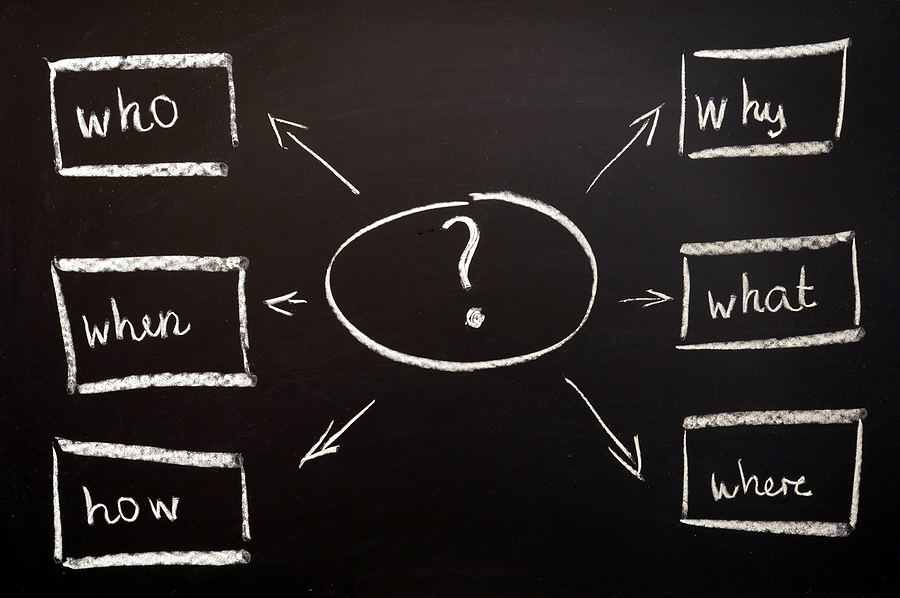
Plotting your novel
Plotting is an excellent method if you have trouble keeping your bum in your seat and getting on with writing. You can sit down and say “right, I just need to finish this tiny scene, which I know will be tiny because I am an awesome plotter”. You don’t just sit there and think “what the hell am I going to write today?” You have a plan; you are Writer GOD of plot!
Pantser:
Being a pantser doesn’t necessarily mean you have no idea where your novel is going. You may have a certain scene in mind, perhaps the ending, but you discover the majority of the plot as a reader would. Some people believe this is the best way to remain ‘creative’ and that not allowing your mind to have free reign will result in a structured and predictable novel.
I don’t really understand this argument as plotting involves ‘making shit up’ just as much as pantsing does.
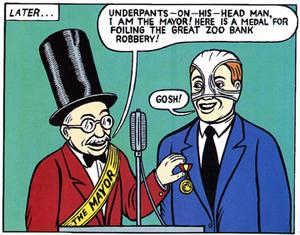
This is the most sensible ‘pantsing’ picture I can find…honest! Have you seen the filth that comes up if you Google ‘pantsing’, in fact I’m going to go do some more research on this disgusting filth…
Because the writer is discovering things as they write them, the novel will be exciting and fresh – it will also be riddled with mistakes. When you’re pantsing and come up with something surprising you don’t have time to go back and correct things. You have to get it down on paper while the idea is still forming.
This style of writing often results in dramatic and compelling scenes, however it makes editing a bitch.
Me:
Personally I use a combination of styles, pantsing a novel but also having set scenes and situations, sometimes even a whole timeline for my novels. Just because I know where my characters are heading doesn’t mean I can’t be creative and spontaneous. I’m guessing you knew the ship was going to sink when you sat down to watch Titanic, right? But you still enjoyed the film (Kate Winslet boob = WIN!), yeah?
I have outlines for some scenes and even whole sections of dialogue sketched out before I start writing…wait, back up ‘before I start writing’? What the hell do you call planning then? Just because I’ve written down some ideas first I’m a plotter? I don’t sit there and say “Damn, this dialogue totally doesn’t fit into this scene but I’ve already plotted it so I’ll cram it in there somehow.” No, I change the dialogue, or the scene, or the character, I create…you know that thing you can only do when your pantsing (why do I sound so bitter today?).
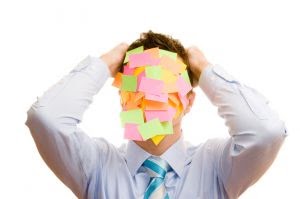
Stuck in the middle with me…
Basically I’m trying to say write in a style that works for you. Write with no style at all, write standing on your hands, or dressed in toast if you want. Just write!
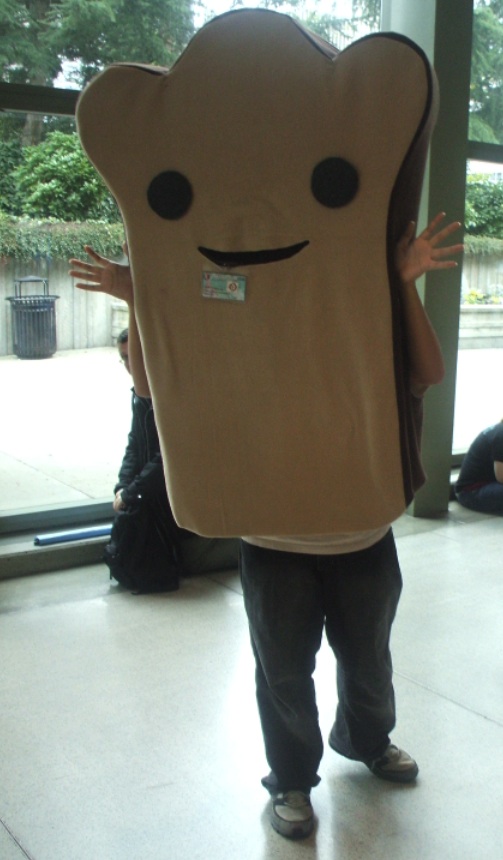
Everyone likes to dress in toast!
I tend to have a vague outline – but then it's like a 'journey' from A to B to C ….. with various detours and stop-overs on the way – I often don't have any idea where the 'road' will take me (or who I'll meet on the way!) but that makes writing the book ad interesting as reading it! 🙂
Hi Steven,
I've tried a bunch of different ways, but ultimately I've still been more of a freight engine than a surgeon with my longer projects, in that I just shove the whole damned thing along the track and examine the carnage afterwards.
(Says the guy with zero books to date, and sixteen outlines.)
P.S. – I've nominated you for a blog award – come by my site to accept!
[…] draft zero – I don’t even want to count this thing as a first run at my novel because I’m a pantser (and usually drunk for most of November), so this is just words on a page that mean I don’t have […]